Getting to Tomar from Lisbon: about two hours by train, 135 km by road, and 1.3 km uphill at the end
A note first on where the train figures come from
Every train figure below comes from a travel publisher rather than CP, the Portuguese rail operator, so treat the journey time and the fare as indicative, and confirm the number of trains a day, the first departure and the last train back separately. Look those up on CP before you commit to a return the same evening.
The one piece of rail infrastructure that is solidly documented is the line itself. Tomar is the terminus of the Ramal de Tomar, the Tomar branch, which runs from Lamarosa on the Linha do Norte and opened on 24 September 1928. Terminus is worth knowing for a practical reason: you cannot miss your stop.
The figures, and where each one comes from
| Lisbon to Tomar | Figure | Whose figure it is |
|---|---|---|
| Train, direct Regional | 1 hour 54 minutes | Travel publisher, not CP |
| Single fare | €10.55 | Travel publisher, not CP |
| Departure stations | Santa Apolónia or Oriente | Travel publisher |
| Driving distance | 135 km | Travel publisher |
| Driving time | About 1 hour 30 minutes | Travel publisher, traffic depending |
| Station to convent | About 1.3 km, 20 minutes | Travel publisher; the hill is UNESCO’s |
Five of the six rows share one source other than the rail operator, and the exact fare is in this table.
The last 1.3 km, which is all uphill from the station
The walk from Tomar station to the convent is a little over a kilometre and takes about twenty minutes on the flat. It is not on the flat. UNESCO listing 265’s own text describes the town as “dominated to its west by the vast monumental complex of the Convent of Christ as it stands at the top of a hill”, and that hill is the whole of the difference between a twenty-minute stroll and a climb.
The bluntest description of it in the whole catalogue is not on a map. It is in the meeting-point line of a private tour, which tells its customers to meet at “Cafetaria do Castelo, a small café in the parking area of the monument, which is uphill, not downtown”. When a tour operator writes that in capital-letter plainness into a booking confirmation, it is because people keep turning up in the wrong place at the bottom of the hill.
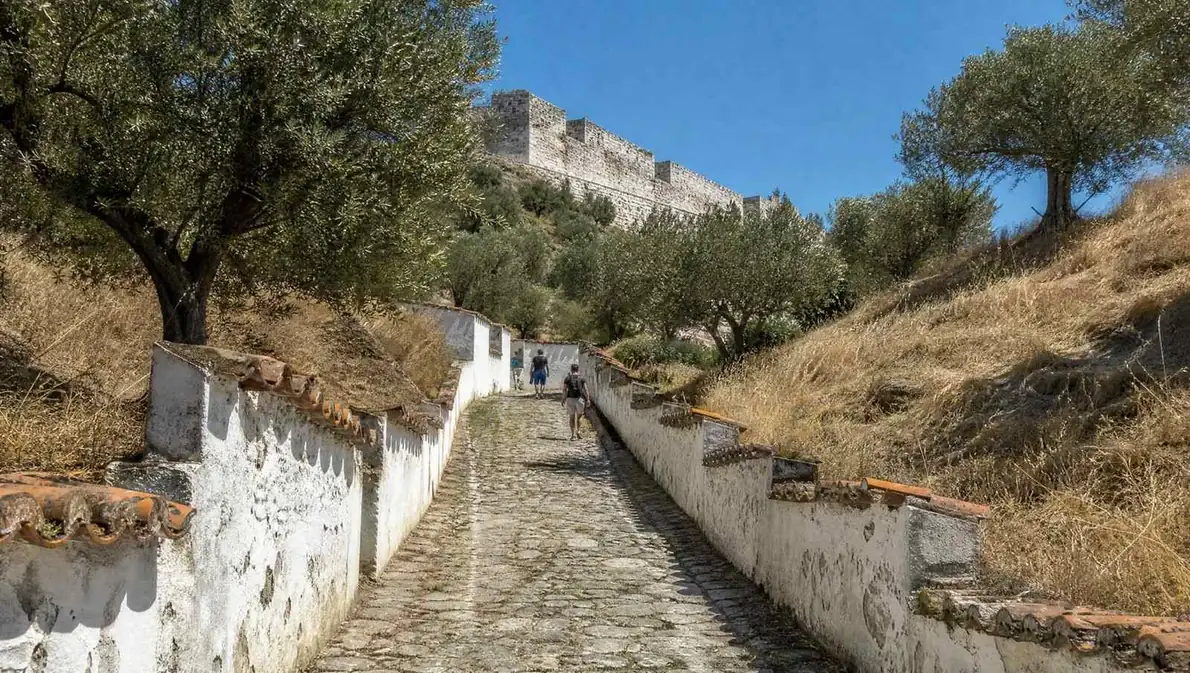
For a bus or taxi up from the station, or parking at the top, check locally before you travel. If the climb is a problem for you, book something that drives you to the gate.
Train, car, or let somebody else do the driving
- Train. Direct, no change, terminus station, and it drops you in the town rather than at the monument — which means you see Tomar, and then you climb. Best if you are staying the night (day trip or a night in Tomar).
- Car. 135 km and about an hour and a half, and it puts you in the car park at the top, which is the only approach that skips the hill. The Aqueduto dos Pegões is a few minutes out of town and effectively needs a car (the aqueduct).
- A coach out of Lisbon. Seven of the eighteen listings on this site are exactly that, and they are how most people get here. What they do about the convent ticket varies more than you would expect — three of them gate it behind an option box (all eighteen, with the admission column that matters).
Michele, reviewing the plain ticket, gives the shortest verdict on the journey anyone has left: “You can get there quickly from Lisbon.” He is right, and the reason this page is long anyway is that quickly is not the same as simply.
 Ticket and lunch in
From Lisbon: Tomar, Christ Convent & Almourol Castle Tour
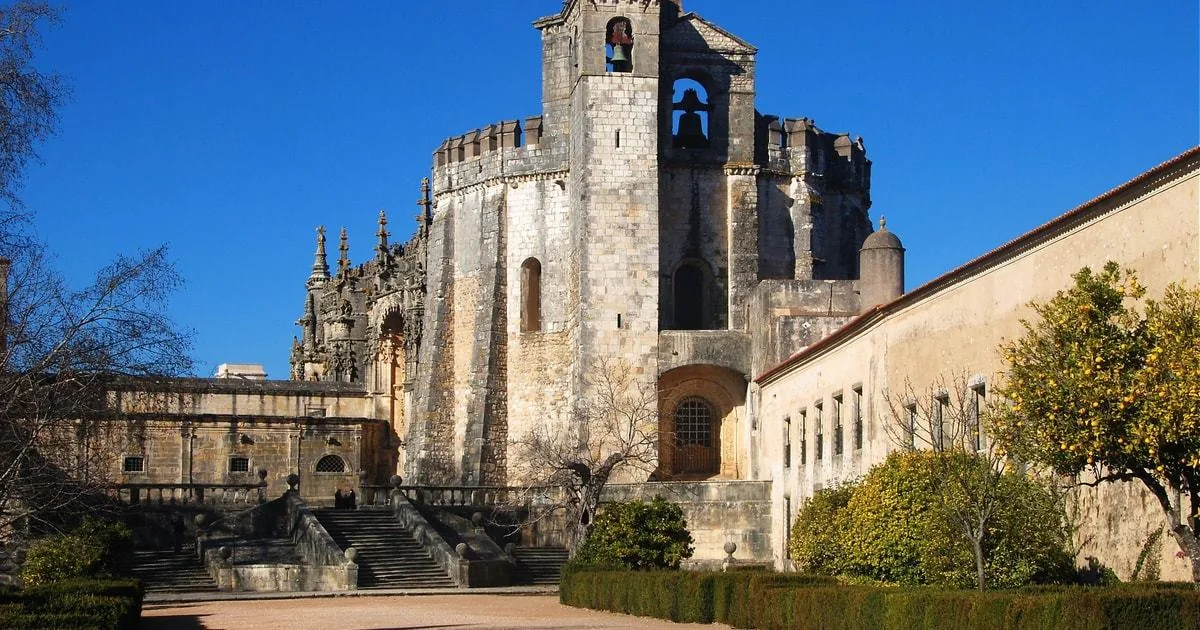 Cheapest with a guide
Tomar: Walking Tour to Convent of Christ Small Group & Tickets
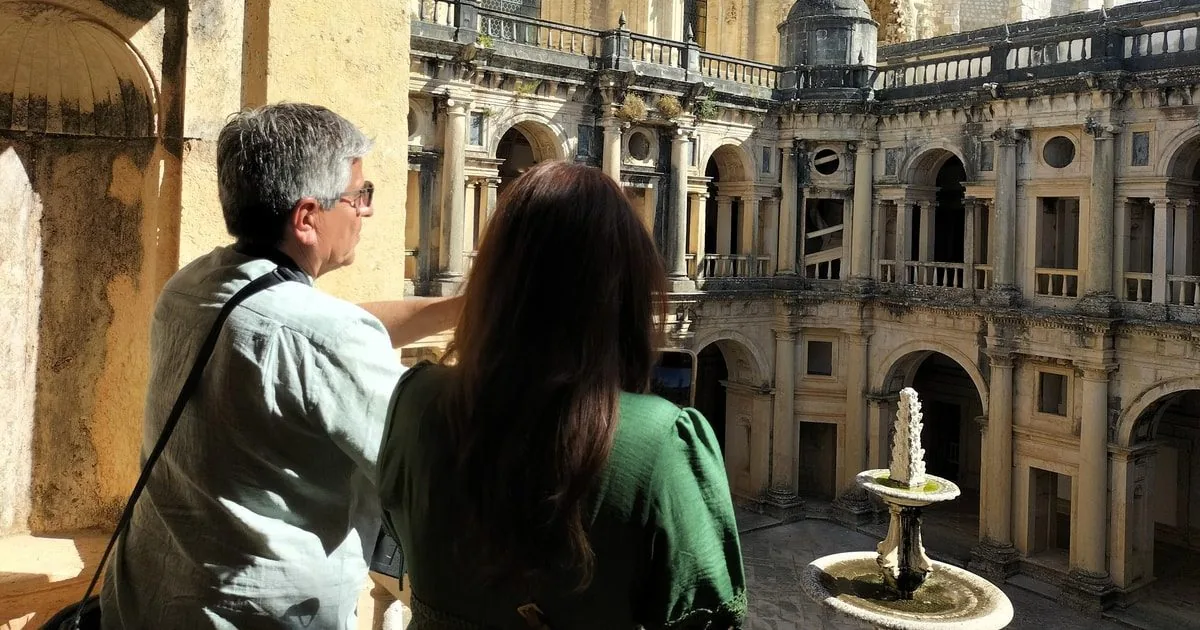 Half a day, ticket in
Lisbon: Tomar (Convent of Christ) Half-Day Private Tour
Next: opening hours and the closed days, how long to allow once you are there, and whether to make a day of it or stay the night.
Frequently asked questions
How do I get from Lisbon to Tomar?
There is a direct Regional train from Santa Apolónia or Oriente to Tomar, which is the end of the branch line, so you cannot miss the stop. A travel publisher gives the journey as about 1 hour 54 minutes. By road it is 135 km and about an hour and a half.
How far is Tomar from Lisbon?
135 km by road, about an hour and a half of driving. By rail it is a direct Regional service of roughly two hours. Check the current timetable before you travel.
Can you walk from Tomar station to the Convento de Cristo?
Yes — about 1.3 km, roughly twenty minutes, and uphill the whole latter part. UNESCO’s own description has the convent standing at the top of the hill above the town. Wear shoes you can climb in, and allow more than twenty minutes if the gradient is a problem for you.
How much is the train from Lisbon to Tomar?
A travel publisher gives the single fare as printed in the table on this page, with a discounted return. That figure is not CP’s own. Check it on cp.pt before you travel.
How many trains a day run to Tomar?
For service frequency, first and last departures and any connecting bus, check the timetable CP publishes.
Is it better to drive or take the train to Tomar?
Drive if you want the car park at the top of the hill and a look at the Aqueduto dos Pegões, which is outside the town. Take the train if you want to see Tomar itself, or if you are staying the night. Take a coach tour if you would rather not think about either.