The Aqueduto dos Pegões: the water supply a Spanish king built for the Order of Christ
Who built it, and why that is the interesting part
The patron is the fact worth stopping on. Philip II of Spain ruled Portugal as Philip I, and he commissioned this aqueduct as Master of the Order of Christ — the order that had inherited the Templars’ castles two and a half centuries earlier. The Portuguese heritage authority confirms the patron in its own words: “O aqueduto dos Pegões, extraordinária obra de engenharia hidráulica, deveu-se a Filipe II de Espanha.”
Read that sentence next to the founding of the place and the whole arc of this site is in it. A round oratory raised by warrior monks on a frontier in 1160; four centuries later, a Habsburg king holding the mastership of their successor order and spending it on hydraulic engineering. The order survived long enough to become something a foreign monarch wanted to be head of (how it got there).
The dates, and why they are decades here
Terzi designed it in the 1580s. Construction began in the 1590s and finished in the 1610s; water was piped into the main cloister a few years after that. When Terzi died in the 1590s the work passed to Fernandes de Torres, and later to Diogo Marques Lucas. Designed to completed is roughly thirty years; building alone is about twenty.
Those spans are given here as decades rather than as years, in line with how this site handles dates.
The arch count, and how to read the different figures
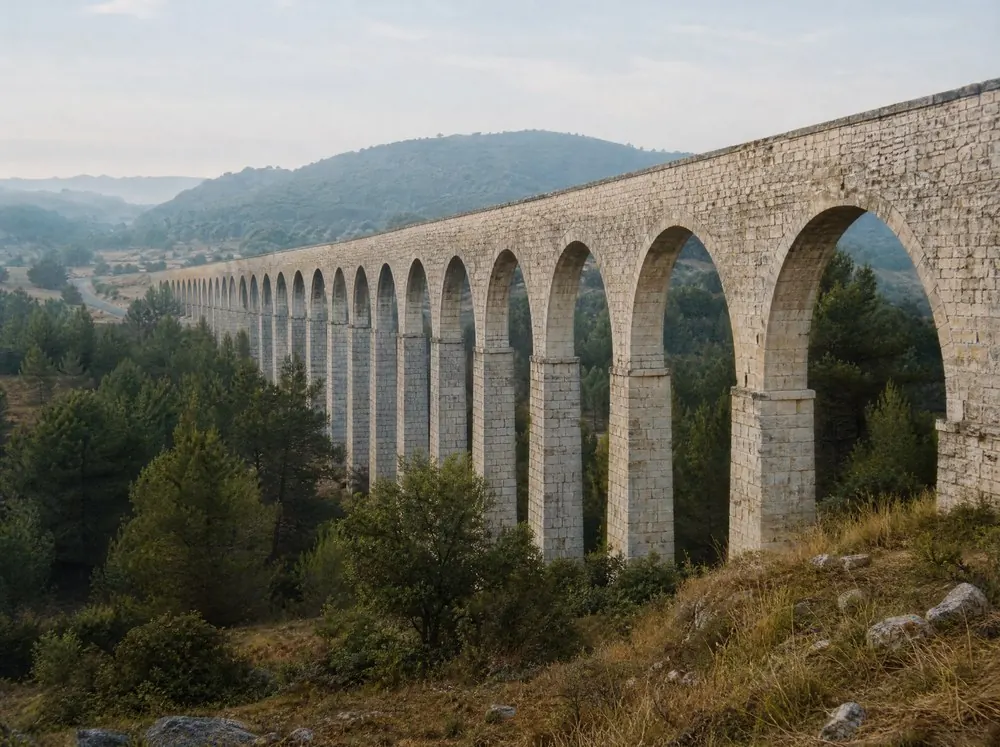
Where the aqueduct crosses the Pegões valley it runs on 58 rounded arches resting on 16 pointed arches. That is the section in every photograph and it is the bit worth going to see.
You will also find a figure of a hundred and eighty arches, and a total length of a little over six kilometres, and a claim about four hundred metres, all in the same paragraph on the same pages. Those numbers cannot all describe the same object: an arcade of a few hundred metres is not a channel of six kilometres. The safe reading is that the arch counts describe the arcaded valley crossing and the six kilometres describes the whole conduit. The arch counts here therefore refer to the valley section; the aqueduct is not arched along its whole length. The fall from one end to the other is a little over twenty-six metres, and four springs fed it.
If you are driving to Tomar rather than taking the train, the aqueduct is the argument for the car. It is outside the town, it is free to look at, and you cannot reasonably reach it on foot from the convent. One Templar-history day trip in this catalogue puts a stop at the Pegões Aqueduct into its own itinerary, and one private tour drives you between the convent, the castle, two churches, the synagogue and the aqueduct — but read that one carefully, because its own know-before-you-go says the convent entrance fee is not included (the admission column).
Is it worth the detour?
If you have a car and an hour, yes. If you are on a coach out of Lisbon and the day already contains a convent and a castle on an island, you will not miss it. What the aqueduct gives you that the convent does not is scale in the landscape: a monastic community at the top of a hill needed water brought to it from miles away, and somebody with a kingdom behind him decided that was worth doing. The building you paid fifteen euros to walk round could not have functioned without it (the rest of the route).
 Templar-specialist guide
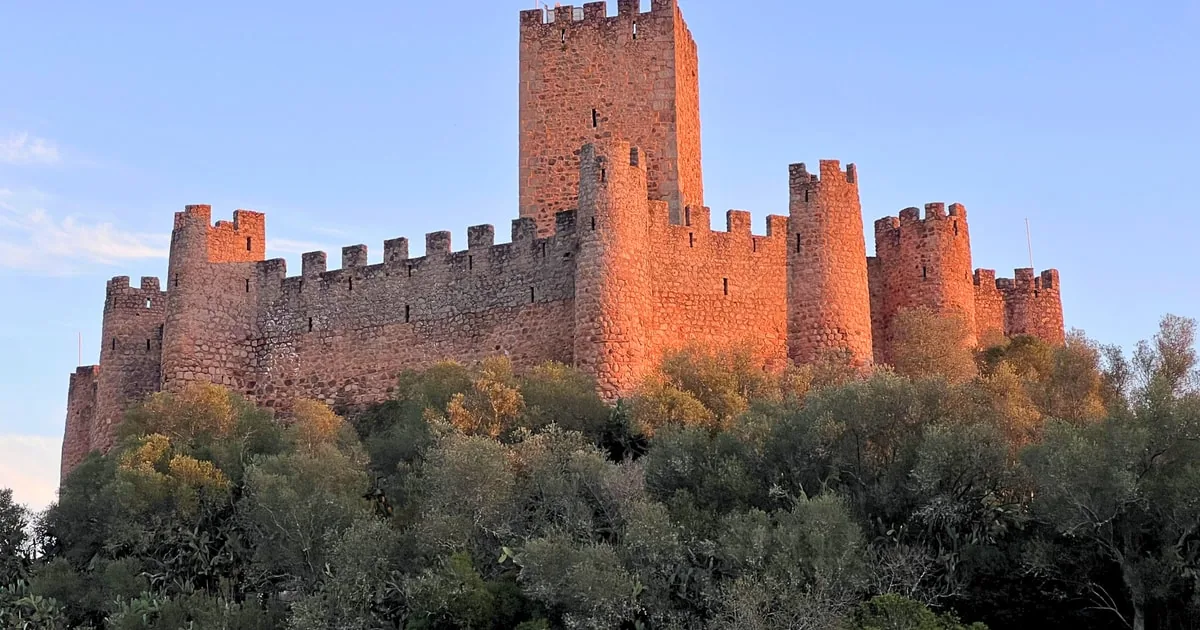
Lisbon: Knights Templar Tour - Almourol, Tomar and Convent of Christ
 Bring your own ticket
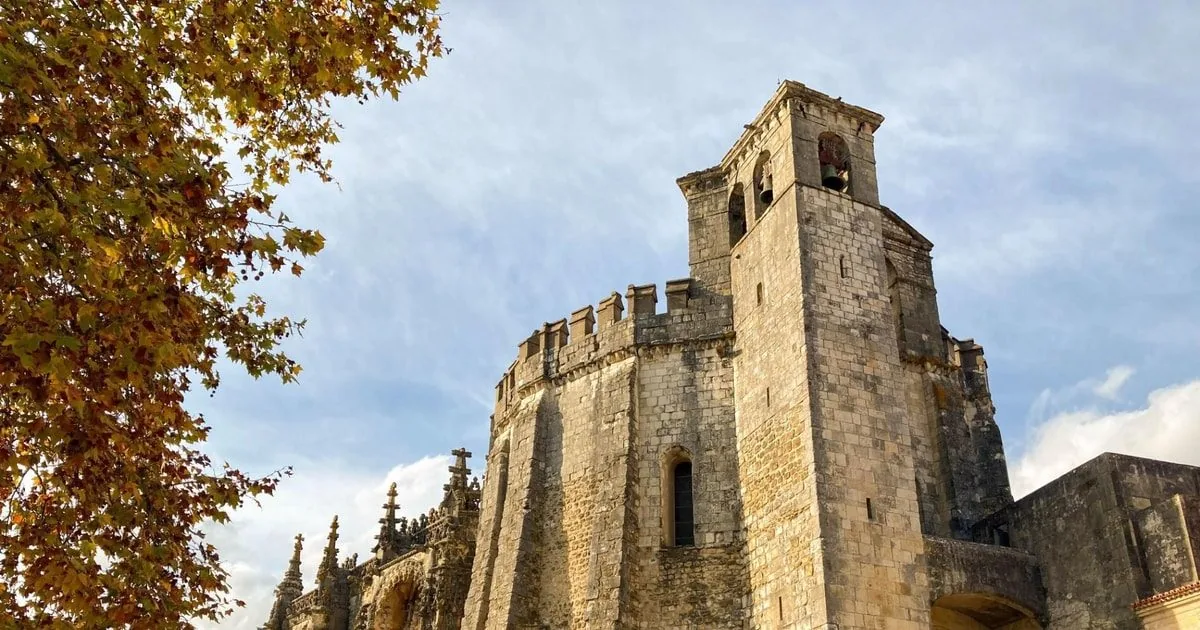
Tomar and Almourol Castle: Knights Templar Private Tour
 Priced per party
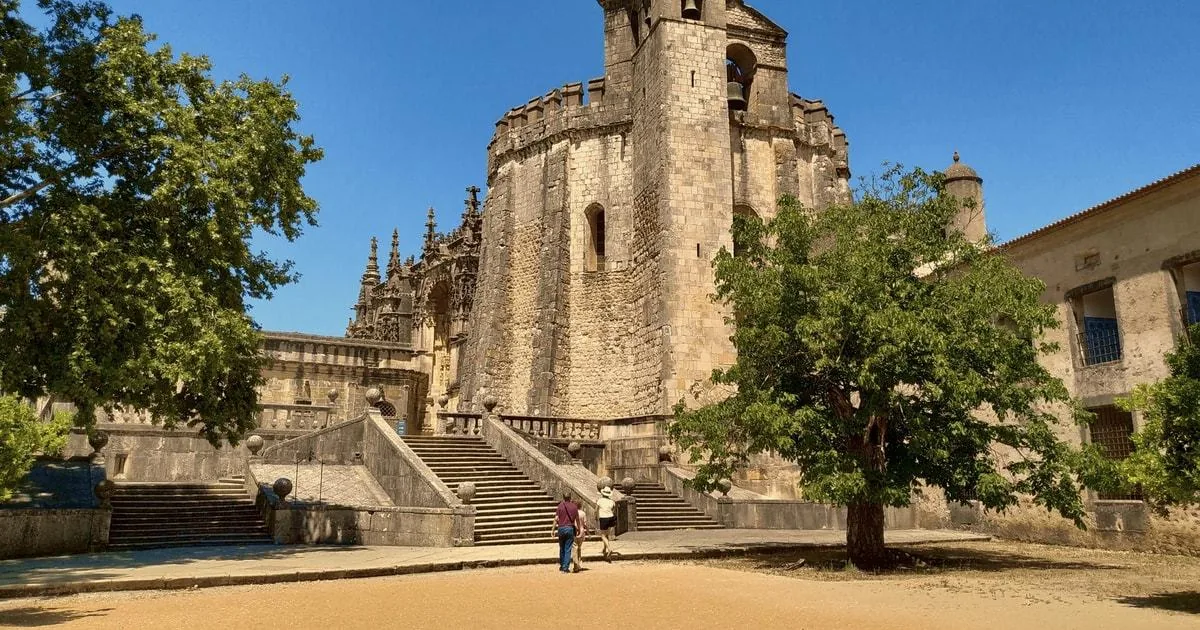
Tomar: Knight's Templar Castle and Convent of Christ Tour
Next: the order that owned it, the cloister the water was piped into, and getting to Tomar with or without a car.
Frequently asked questions
What is the Aqueduto dos Pegões?
The aqueduct that supplied water to the Convento de Cristo in Tomar. It was commissioned by Philip II of Spain in his capacity as Master of the Order of Christ, designed by Filippo Terzi, and built over roughly two decades from the 1590s.
How many arches does the Pegões aqueduct have?
Where it crosses the Pegões valley it runs on 58 rounded arches resting on 16 pointed ones — the section in every photograph. A larger total arch count also circulates, and it describes more than the valley crossing. The aqueduct is not arcaded along its whole length.
Is the Pegões aqueduct part of the Convento de Cristo ticket?
No. It is outside the town, it is a separate trip, and it is free to look at. You effectively need a car, though one Templar-history day trip in this catalogue puts a stop there into its itinerary and one private tour drives you to it.
Who built the Pegões aqueduct?
Filippo Terzi designed it as chief architect of Portugal, for Philip II of Spain, who held the mastership of the Order of Christ. After Terzi’s death the work passed to Fernandes de Torres and later to Diogo Marques Lucas.
How long is the Pegões aqueduct?
A little over six kilometres of conduit, with a fall of a little over twenty-six metres from end to end, fed by four springs. Only part of that length is the famous arcade, which is why arch counts and total lengths in the same sentence are usually describing two different things.