What to see at the Convento de Cristo, in the order you will walk it
The walk, stop by stop
This is the sequence the site imposes on you, not a preference. Everything is uphill of the thing before it.
- The hill. UNESCO describes Tomar as “dominated to its west by the vast monumental complex of the Convent of Christ as it stands at the top of a hill”, and you feel the sentence before you read it. From the station it is about 1.3 km and roughly twenty minutes, climbing (the approach).
- The castle walls. The convent sits inside the walls of the Castelo de Tomar, begun by the Templars on 1 March 1160. Access to the walls varies: three reviewers of the ticket listing say the castle was shut, and a reviewer of another listing describes climbing its stair (who said what).
- The Charola. The round Templar oratory, sixteen-sided outside with an octagonal core and an ambulatory round it, painted and gilded. UNESCO calls it one of the typical rotondas of Templar architecture “of which few examples are still extant in Europe”. This is the room people stop dead in (what it is, and what it is thought to copy).
- The Manueline nave. The Templars’ round church was a round church and nothing else. Under King Manuel I a nave was built on to it and connected by an arcade, so you now walk out of a twelfth-century oratory into a sixteenth-century church without going outdoors. That join is the whole site in one doorway (the order that made it).
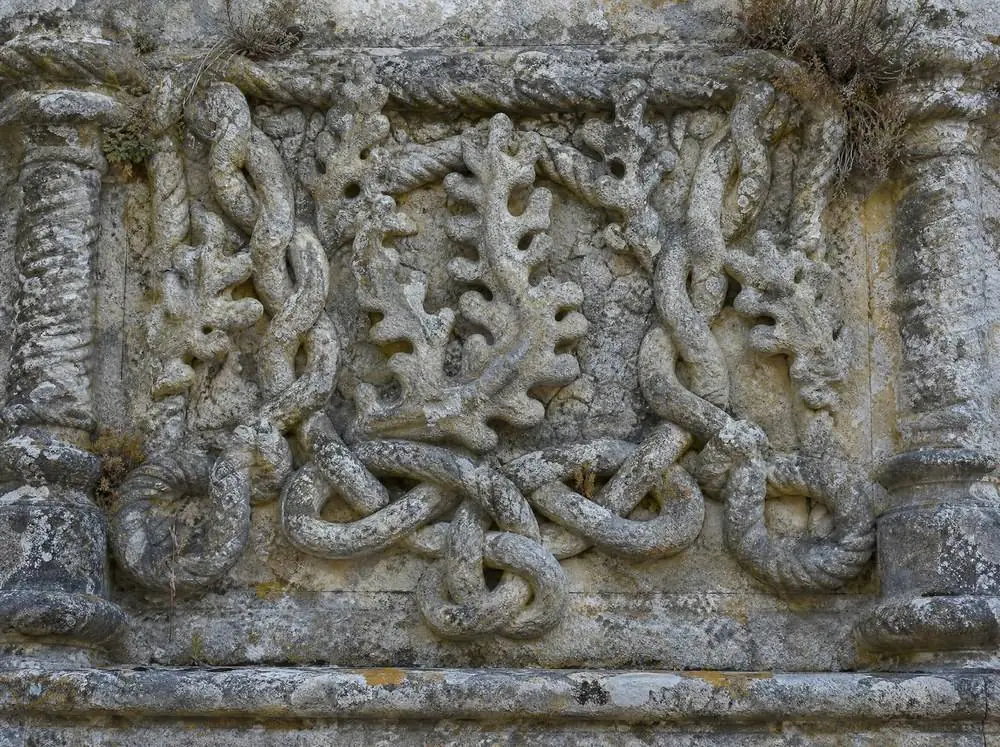
- The Janela do Capítulo, from outside. The famous window is on an exterior wall of the Manueline church and you see it from a courtyard, looking up. People miss it by staying indoors. Ask, or follow the visitors with their heads back (what you are looking at).
- The cloisters. Eight are named by the sources that count them, from a Gothic one of the fifteenth century to the great classicising courtyard of the sixteenth. They are on different levels and they connect in ways that are not obvious (all eight, named).
- The terrace, and the aqueduct beyond. From the high ground you can see where the water came from. The Aqueduto dos Pegões supplied the convent and it is outside the town, which makes it a separate trip and a good one (the aqueduct).
What a reviewer noticed that a guidebook would not
Spencer, on the plain ticket, describes the moment the church lands: “Inside the old church where paintings from many centuries ago were still up on the walls for admiration and worship. This area was my favourite part, right where you show your ticket to enter the convent.” He then says the thing that half the reviews on this site say in some form — that his guide “knew a lot about many details on how the monks lived their day to day lives”. The domestic ranges, the kitchens, the dormitories: those are the parts nobody photographs and the parts people remember.
Adriana M, on a private tour, gets at the other half in one Portuguese phrase: “um lugar de muita história e cheio de símbolos” — a place of much history and full of symbols. The symbols are worth understanding properly (what the cross here actually is).
What is not inside, and where it is instead
- The aqueduct is outside the town. It is not part of the ticket walk and it effectively needs a car.
- The Templar castle walls are around the convent rather than in it, and their access has been reported as closed.
- Tomar itself — the synagogue, the church of Santa Maria do Olival, the Mouchão wheel, the Praça da República — is down the hill and is a separate afternoon. Several listings pair the two (which ones).
- The Convento de Santa Iria, which appears in one listing on this site, is a different building entirely. Do not confuse them.
Restoration, and what it does to this route
Parts of the site are under conservation and restoration work and are closed while it goes on. The scope changes, so for what is shut on any given morning, check the operator’s own page on the day you visit. Diana, who found parts of it closed, still wrote that “it was still great to see what was available, to see the architecture, and to hear the history of the Knights”. That is the right expectation to bring: the route above is the shape of the visit, and on any given month a stop or two of it may be behind a hoarding.
 Cheapest with a guide
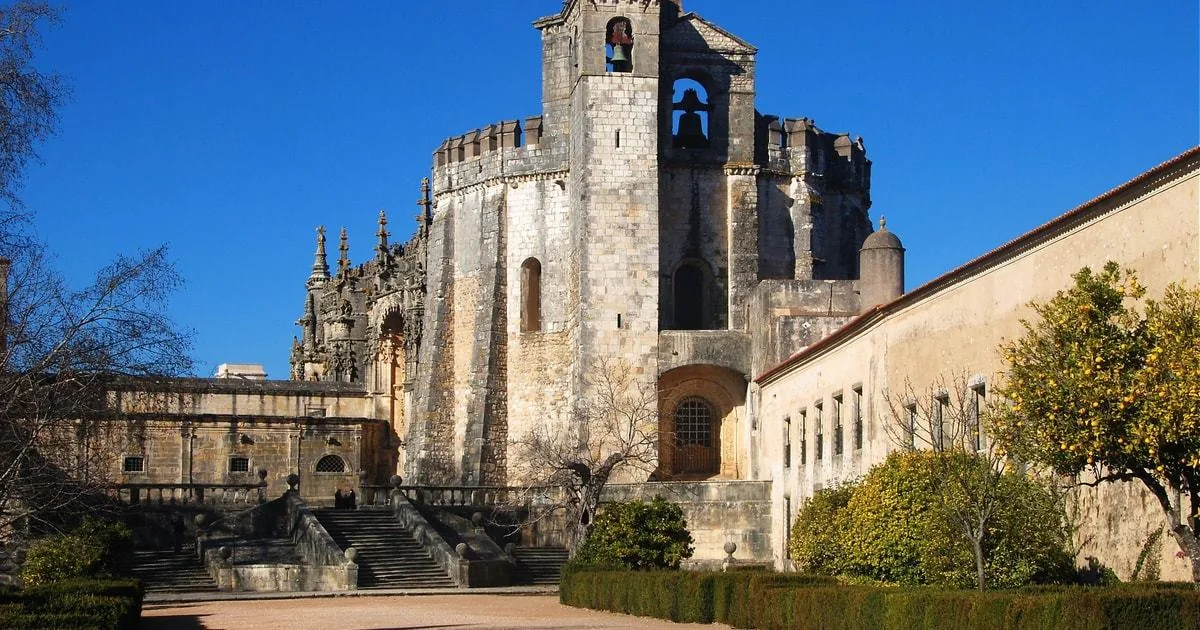
Tomar: Walking Tour to Convent of Christ Small Group & Tickets
 The whole day, in Tomar
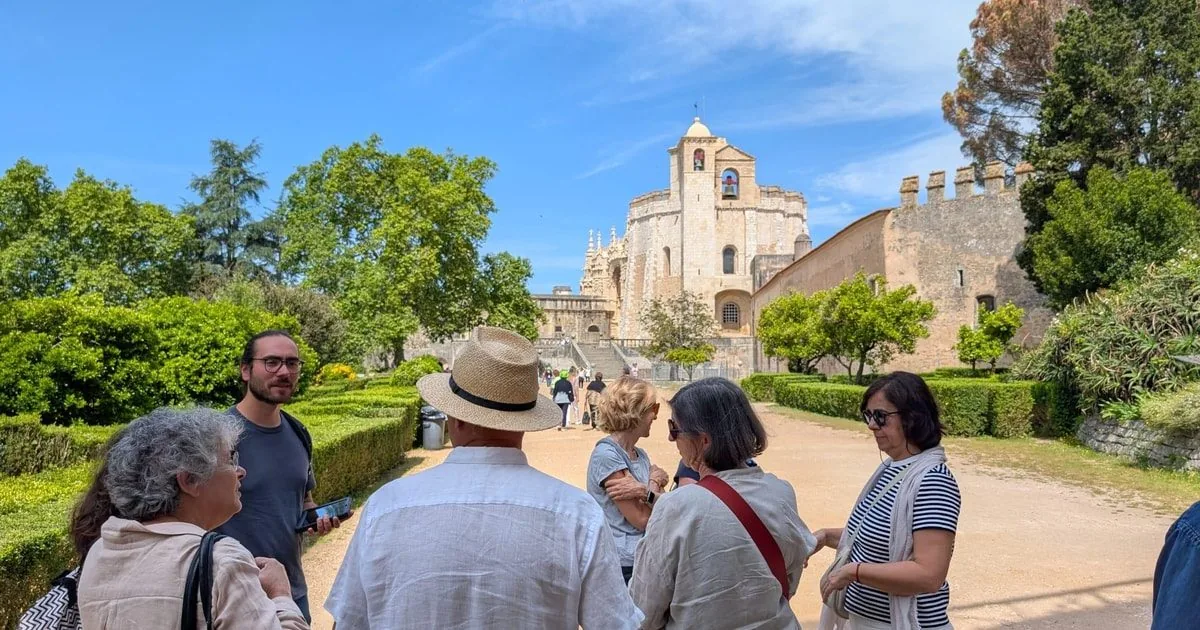
Tomar and the Templars Convent of Christ: A Historical Tale
 Priced per party
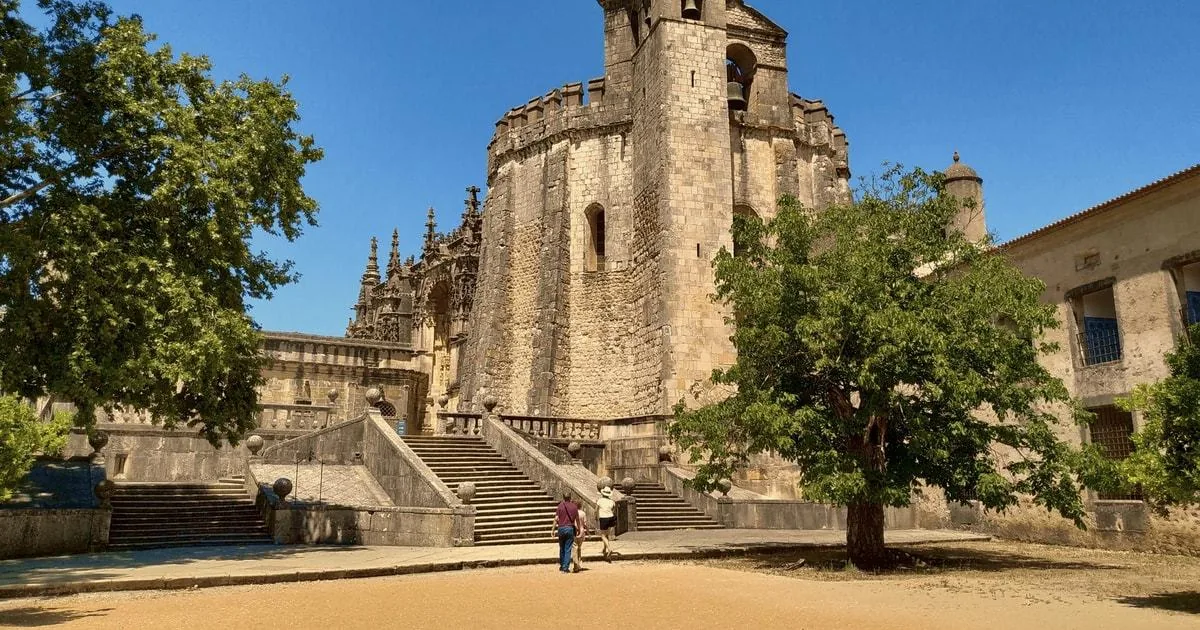
Tomar: Knight's Templar Castle and Convent of Christ Tour
Go deeper: the Charola, the Chapter House window, the cloisters, the aqueduct.
Frequently asked questions
What is there to see at the Convent of Christ in Tomar?
Seven things, in this order: the hill, the Templar castle walls, the round Charola, the Manueline nave built on to it, the Janela do Capítulo seen from the courtyard outside, the cloisters, and the terrace with the Aqueduto dos Pegões beyond.
What is the most important thing to see at the Convento de Cristo?
The Charola — the round Templar oratory at the centre of the complex, sixteen-sided with an octagonal core. UNESCO calls it one of the typical rotondas of Templar architecture of which few examples survive in Europe. The Janela do Capítulo runs it close.
In what order should I visit the Convento de Cristo?
The building decides for you. You climb, you pass through the castle walls, you reach the Charola, you walk from the Charola into the Manueline nave, you go outside to look up at the Chapter House window, and then you work through the cloisters to the terrace.
Is the Janela do Capítulo inside or outside?
Outside. It is on an exterior wall of the Manueline church and you view it from a courtyard, looking up. Visitors who stay indoors walk straight past the single most reproduced piece of carving in Portugal.
What is there to do in Tomar besides the convent?
The town below has the Tomar synagogue, the church of Santa Maria do Olival, the Mouchão garden and its water wheel, and the Praça da República. Several listings on this site pair the convent with a walk through the old town, and one covers the town without going into the convent at all.